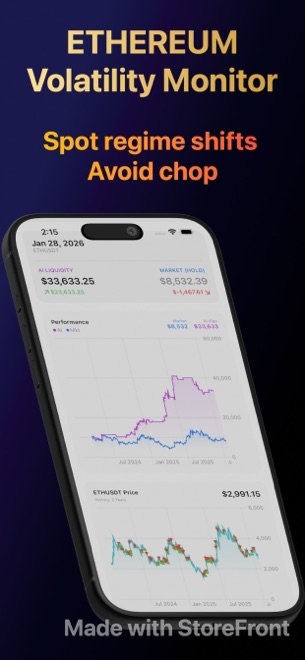
Testing Crypto Seasonality and S&P 500 Overlays
Crypto lore is full of calendar slogans like "Uptober" and debates over whether Bitcoin trades like a leveraged tech index. Rather than taking seasonal memes on faith, Market Brief AI lets you sync S&P 500 market context via Zeus and calendar overlays via Tyche, Hermes, and Helios—then test them directly against buy-and-hold in closed-bar simulations.
Calendar overlays vs statistical sample size
With daily Binance USDT spot history stretching back to 2017, any single calendar month—such as October or May—has fewer than ten independent annual observations. A single outlier bull run in 2017 or 2021 can skew a naive monthly average heavily, making a coincidence look like a permanent law of nature.
Market Brief AI includes the Seasonality signal and three free calendar/seasonal context agents—Tyche, Hermes, and Helios (alongside exogenous natural-event feeds Poseidon for USGS earthquakes and Aiolos for NOAA tornado reports, useful for testing spurious-correlation discipline). Having them on one screen lets you verify whether calendar tendencies hold across rolling windows or vanish outside two historic years.
- Tyche, Hermes, and Helios (Free): calendar and seasonal context workers synced locally on iPhone and iPad.
- Seasonality signal (Free): tests recurring periodic structure atop the Hera baseline HMM.
- Zeus (Pro): brings public S&P 500 equity-index data in as cross-asset risk-on / risk-off context.
When S&P 500 equity context (Zeus) shifts crypto regimes
Cross-asset correlation between major crypto pairs and US equities is itself regime-dependent: during calm idiosyncratic crypto cycles correlation can drift near zero, whereas during global liquidity tightening or equity risk-off selloffs correlation frequently spikes positive right when diversification is wanted most.
Enabling the Zeus agent in Pro supplies S&P 500 context to input-aware models (Metis and Athena), letting you examine whether equity drawdowns gave early warning for crypto bear transitions or merely duplicated signals already visible in BTCUSDT returns.
Test the strategy blend slider between pivots and seasonality
In Market Brief AI Pro, the strategy blend control lets you weight fractal price pivots continuously against seasonal timing rather than forcing an all-or-nothing toggle. Test blends conservatively so you do not curve-fit an exact percentage to past noise.
Follow four steps to separate genuine cross-asset or calendar structure from hindsight luck.
- Run a pure Hera price-only backtest on daily bars from 2018–2022 first, then from 2022–2026 separately.
- Enable Tyche, Hermes, Helios, and the Seasonality signal on the first half of history and check whether the same setup holds up on the second half without retuning.
- In Pro, sync Zeus (S&P 500 context) with Metis or Athena and inspect how equity selloffs affected regime calls during weekday vs weekend bars.
- Test coarse steps on the strategy blend slider (for example, 0%, 50%, and 100% pivot-to-seasonality mix) rather than hunting for a fragile 63% optimum.
Weekend gaps and exogenous noise checks
Remember a crucial structural mismatch when combining Zeus with Binance pairs: US equity indices close every Friday afternoon and on bank holidays, while crypto spot markets trade nonstop 24/7. Friday’s S&P 500 state carries flat across Saturday and Sunday until Monday’s cash session settles.
Treat every seasonal and equity overlay as an empirical hypothesis test inside a local simulator—never as a calendar guarantee or investment recommendation.
Which context agents are free versus Pro in Market Brief AI?
Kronos (headline/core CPI), Poseidon (USGS earthquakes), Aiolos (NOAA tornado reports), and Tyche, Hermes, and Helios (seasonal and calendar overlays), plus the Seasonality signal, are free. Zeus (S&P 500) and Demeter (Fed tone), along with strategy blend, require Pro.
Why does Market Brief AI include earthquake and weather agents like Poseidon and Aiolos?
Real-world physical shock feeds from USGS and NOAA let curious researchers test exogenous disruption hypotheses—and see firsthand how easily unrelated series can correlate by chance over short windows unless tested rigorously.
Does historical October or Q4 seasonality guarantee positive crypto returns?
Never. Calendar tendencies calculated from less than a decade of crypto history have tiny sample sizes and frequently break down when macro liquidity or market structure changes.