What it does

Features

The full list, each with what it is for.

Four regime models, from Hera to Athena

Four regime models, from Hera to Athena

A hidden Markov model assumes the market moves between hidden states — calm uptrend, chop, decline — and works out from the returns which state it is most likely in now. Market Brief AI ships four of them: Hera, the classic three-state model; Metis, which also reads external inputs; Hestia, which models how long a regime tends to last; and Athena, which tracks several regime layers at once. You choose one, set the window, confidence and iteration budget, or let auto-tune pick.

  • Hera: standard three-state HMM (free)
  • Metis and Hestia: input-aware and duration-aware models (Plus)
  • Athena: factorial model for layered regimes (Pro)
  • Window, confidence and iterations under your control
Backtest against just holding

Backtest against just holding

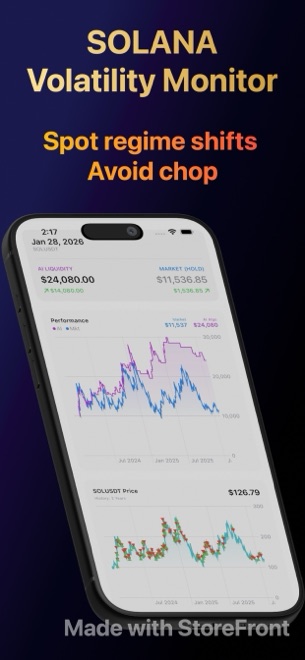
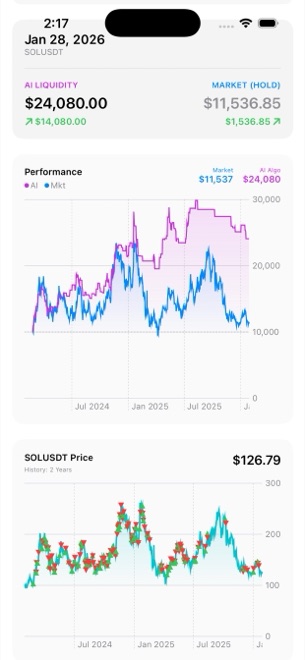
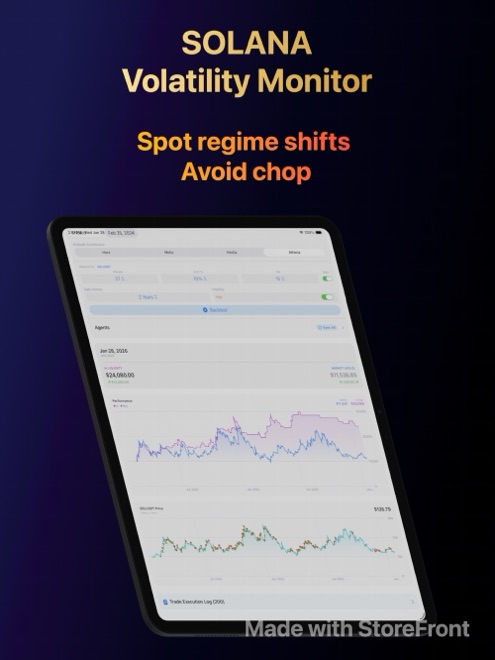
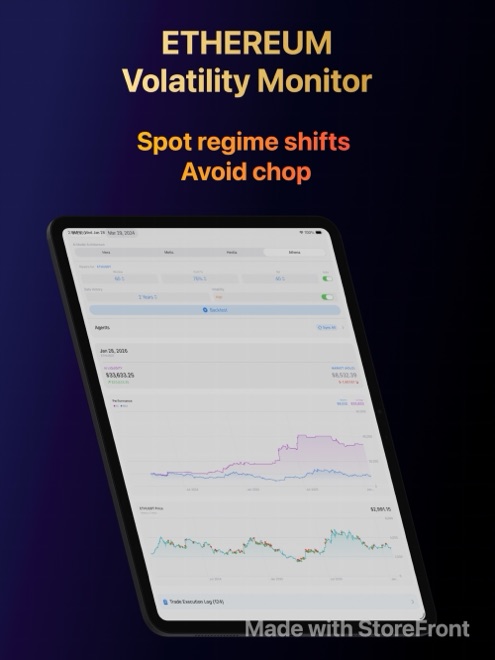
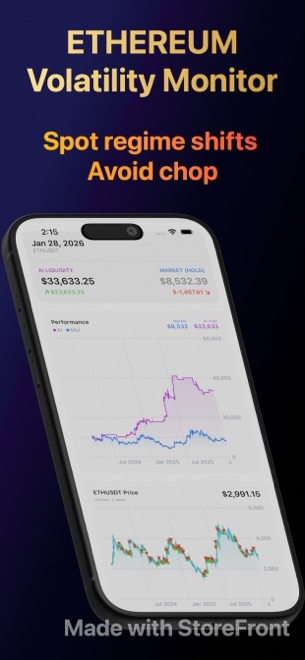
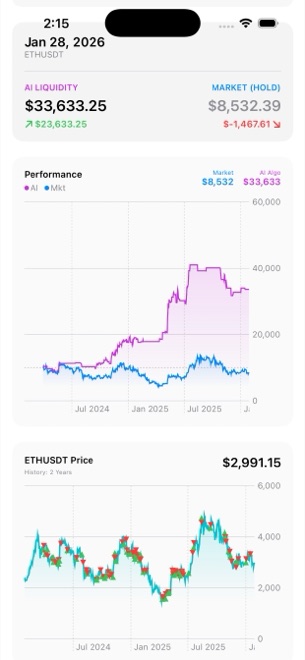
Pick a starting capital and a date. The app replays the model's BUY, SELL and WAIT decisions bar by bar with closed-bar semantics — the same rules a live decision would follow — and draws the resulting equity curve in purple over the buy-and-hold line in blue. The dashboard puts the two final figures side by side, with the difference in green or red.

  • Replay with the same closed-bar rules as live decisions
  • Strategy equity versus buy-and-hold on one chart
  • Capital from $100 to $1B, any start date in the history
  • Trade markers on the price chart, with reasons in the log
Agents that add context to the price

Agents that add context to the price

Prices alone miss what moves them. The agents are named data workers, each pulling one public source: Kronos reads US inflation from the Bureau of Labor Statistics, Zeus brings the S&P 500 in as market context, Demeter follows the tone of the Federal Reserve, Poseidon watches earthquakes, Aiolos tornado reports, and Tyche, Hermes and Helios add calendar effects. Toggle each one and sync them together.

  • Kronos: CPI releases, headline and core
  • Zeus and Demeter: S&P 500 context and Fed tone (Pro)
  • Poseidon and Aiolos: USGS earthquakes and NOAA tornado reports
  • Tyche, Hermes, Helios: seasonal and calendar overlays
Signals and guards on top of the regime

Signals and guards on top of the regime

The regime says where the market probably is; the signal layer decides what to do about it. Fractal pivots, seasonality, SuperTrend, flag patterns and five auction-market signals can each be switched on, and a strategy blend slider mixes pivots with seasonality. Risk guards sit on top: a flash-crash detector, an EMA crash guard, a CUSUM drift guard and a hard stop.

  • Fractal pivots, seasonality, SuperTrend, flags
  • Auction signals: balance and imbalance breakouts, POC reversion, LVN rejection
  • Flash crash, crash guard, drift guard, hard stop
  • Strategy blend between pivots and seasonality
Sentiment scored on the device

Sentiment scored on the device

Headlines about the asset are pulled from the public GDELT news index and scored by FinBERT, a finance-tuned language model that runs on the phone through Core ML. No text is sent to a cloud model. The score feeds the regime models as one more input, and you can open the analyser and score any sentence yourself.

  • FinBERT through Core ML, entirely on the device
  • GDELT news index as the public source
  • Your own sentences, scored on demand
Forecast history and the execution log

Forecast history and the execution log

Each run leaves a forecast card: the regime call, its confidence, the price at the time and a one-line reading. Plus keeps the last ten per asset. Pro opens the full trade execution log, every buy and sell with the rule that fired it, so a good backtest can be read rather than admired.

  • Forecast cards with regime, confidence and price (Plus)
  • Full trade execution log with reasons (Pro)
  • Everything stored locally, readable offline